GPT 6 Astra vs Claude Fable 5.1: Real Tests
GPT 6 Astra vs Claude Fable 5.1: Real Tests
GPT 6 Astra edged out Claude Fable 5.1 in my testing — it won three of four real-world builds and cost fewer tokens to get there. I got early access to GPT 6 Astra and spent three days running both models head-to-head on actual projects, not just benchmark charts. Here's exactly what I tested, who won each round, and why the decision between them is more interesting than the scoreboard makes it look.
This week was the battle of the AI titans. Anthropic dropped Claude Fable 5.1 and OpenAI released GPT 6 Astra. Everyone wants to know which one deserves your subscription. So instead of reading you benchmark numbers off a press release, I put both through four real use cases: a browser game, a landing page, a motion-graphics explainer, and a 3D globe dashboard app.
What Do the Benchmarks Actually Say?
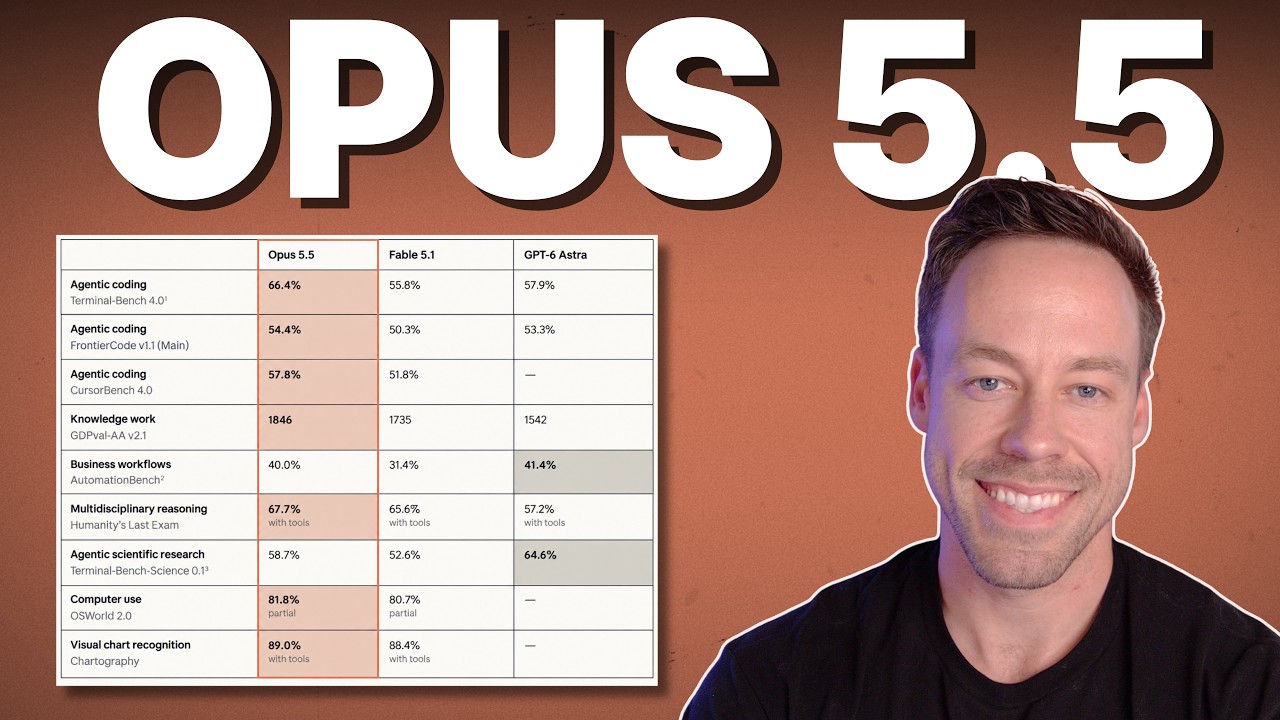
By the raw numbers, GPT 6 Astra beats Claude Fable 5.1 on nearly every reported benchmark. But the numbers come with a big asterisk.
First, the data gap. Anthropic reported far fewer benchmarks than OpenAI did. OpenAI basically gave you everything — every eval, every cost breakdown. Anthropic left a lot of cells blank, which makes a clean head-to-head harder than it should be.
Second, don't read these scores in a vacuum. If GPT 6 scores a 74.1 on a benchmark and Fable 5.1 scores lower, that doesn't mean GPT 6 is "7.5% better" at your actual work. A benchmark like Deep Suite v1.1 might show Gemini 3.8 Flash beating almost everything except GPT 6 — and that still tells you very little about your day-to-day.
Here's the honest read: GPT 6 is a genuine step change from previous GPT models, and Claude Fable 5.1 is a strong, incremental improvement over Fable 5. If you've used Fable 5, you already know 5.1 is good. It's not a leap — it's more of what people already liked.
Which Model Is Cheaper to Run?
GPT 6 Astra consistently hits the same accuracy as Fable 5.1 for roughly half the token cost. Cost is the other half of the equation, and historically OpenAI's models have been more efficient here. That pattern holds with Astra.
Look at Terminal Bench 4.0 as one example. At their best, the two models are basically tied on accuracy — Fable 5.1 lands around 55.8% and Astra around 56.7%. Nearly identical.
The difference is the bill. At the max setting, that run cost about $10.35 with Astra versus $19.50 with Fable 5.1. The gap widens further at the "extra high" reasoning tiers. Across nearly every benchmark, GPT 6 tends to be significantly cheaper for performance that matches or beats 5.1. For anyone running these models at volume, that's not a rounding error.
Test 1: Can They One-Shot a Fortnite Clone?
For a single-prompt browser game, Codex (running GPT 6) nailed it and Claude Fable 5.1 fell short. This test was inspired by a video from a creator named Cole — only about 7K subs, worth a look — who built a browser Fortnite with Fable. I gave both models the same long prompt plus several reference images: build a browser-playable Fortnite with 99 bots, weapons, building, the works.
GPT 6, running through Codex, produced a game with a mode-selection screen, a battle bus intro, gliders, chests, lootable weapons, shields, an inventory system, a full map on tab, and working build mechanics. The bots were intentionally bad because I asked for that. It took Codex about 45 minutes to one-shot the whole thing. I couldn't get an exact token count because of how the early-access billing worked, but for a single pass it was genuinely solid.
Fable 5.1 built a similar game — lobby, battle bus, building, gunplay — but it felt less polished. The camera was janky, the jump audio was grating, moving through structures you'd just built slid you right through them, and the gunplay had wild bloom where your shots didn't land where you aimed. Fable took about an hour and a half and roughly 750,000 tokens to get there.
Both are impressive for a one-shot off a long prompt with references. But there's no real competition on this one. Codex nailed it. Winner: GPT 6 Astra.
Test 2: Which Model Designs a Better Landing Page?
GPT 6 Astra produced a clean, professional landing page on the first try; Fable 5.1's version looked generic and dated. The prompt was simple: build a landing page for an AI travel website where users enter a destination and get an itinerary. I told both models I didn't care about functionality — I was judging aesthetics only, and they could use any tools or research they wanted.
GPT 6 leaned on its built-in image model, which is a real advantage here. The hero section was clean, with a departure/destination input, supporting imagery throughout, a FAQ section, and a footer. The key line: it didn't scream "AI slop." It wasn't an awards-level site, but for a low-direction prompt it clearly communicated what the product does and looked legitimately clean.
Fable 5.1, with the identical prompt, gave me something basic. Uninspired coloring, a generic text-left-image-right hero, an AI-looking border, standard rounded-corner cards, and essentially no motion. It didn't generate its own images the way Astra did — it fell back on its internal graphics system, and the whole thing read as light-blue-into-dark-blue default. Honestly disappointing, because Anthropic models have usually been stronger at front-end.
Here's the nuance that matters: the better you are at front-end, the less the base model matters, because you can coach it with reference images and component libraries. But most people don't work that way. Most people type "build me this" and ship what they get. If that median output is what we're judging, this is night and day. Winner: GPT 6 Astra.
Test 3: Which Model Makes Better Motion Graphics?
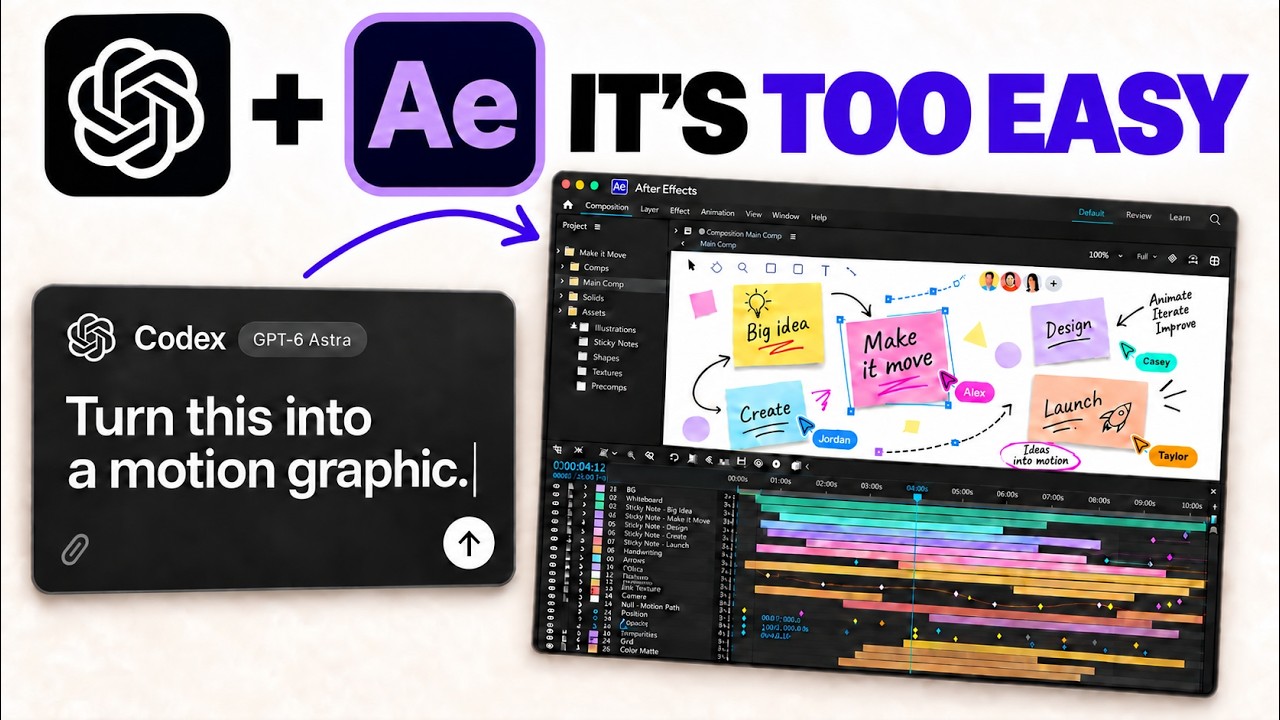
This one was a tie — both models handled the tooling and the output equally well. I connected both to the Higgsfield MCP and had them call the same motion-graphics skill I built. The task: a 15-second 2D explainer on how internet messaging works — what actually happens when you text someone from your phone.
Both models routed the prompt correctly, called the outside tool, hit the underlying model (Seedance 2.5), and returned polished 15-second explainers with clean narration and packet-hop visuals. There was no meaningful quality gap between them.
The real takeaway here isn't about the models at all — it's that both GPT 6 and Fable 5.1 are excellent at orchestrating external tools through MCP. When the heavy creative lifting is offloaded to a specialized service, the model's job is routing and prompting, and both do that job well. Winner: Tie.
Test 4: Which Model Handles a Creative 3D Web App Better?
GPT 6 Astra delivered a cleaner, more usable 3D globe app; Fable 5.1 went all-in on visual spectacle at the expense of usability. This final test gave both models room to be creative. The prompt asked for a 3D globe travel dashboard — the landing-page test was about function, this one was about pushing visual bounds.
GPT 6 built "Orbit." You enter a departure and destination, it plots the route on the globe, and a details panel shows flight info — one stop, 22 hours, local temperature, a sample round-trip fare. Click "explore" and you get a photo, a description, things to do, and a save button. It even added a "chase the sun" feature showing where golden hour falls on the globe in real time. Clean, functional, and close to shippable.
Fable 5.1 built "Arclight," and it swung hard for spectacle. A dramatic loading screen, text that follows the flight route, live fare lines, a solar clock that updates fares as you scrub time, and slick city animations when you click a destination. It genuinely looks cool. But it's a lot — almost too much. The interface is so bright that some of the detail is hard to read, and it feels like visual spectacle became priority number one over usability.
Both were one-shots. Astra's is professional and low-effort to finish. Fable's is impressive but feels like many prompts away from usable. The dream is tempering Fable's creativity with Astra's cleanliness. Winner: GPT 6 Astra.
So Which Model Should You Actually Use?
Across four real tests, GPT 6 Astra won three and tied one — and it's cheaper by tokens. By the raw benchmarks, Astra also edges ahead. If you're keeping score, Astra takes the round.
But these were four one-shot tests, and the real answer is more nuanced than a scoreboard. Both of these models are genuinely, seriously good. I've been using Fable 5.1 heavily for three days, and honestly these one-shot tests almost undersell what it can do in a real iterative workflow. I have yet to meet anyone saying "Fable 5.1 sucks." That take just isn't out there. At the same time, Astra feels great — every generation was smooth and clean.
The bigger question is subscription strategy, and Anthropic's usage policy is part of it. They lowered limits and then framed it as an increase when it was actually less over the past month. On the 20x Fable plan, you still only get around 50% of your weekly usage before hitting walls — 20x doesn't really mean 20x. OpenAI, meanwhile, resets you every three days and generally feels more generous with access.
So here's my actual recommendation: if you've been paying $200/month for a single 20x plan, seriously consider running the 5x plan with OpenAI and the 5x plan with Anthropic instead. Same monthly cost, but now you have options and you can test both in your real day-to-day. Because no video, no test, and no benchmark will ever match what you learn using a model on your own project.
Frequently Asked Questions
Is GPT 6 Astra better than Claude Fable 5.1?
In my four head-to-head tests, GPT 6 Astra won three (Fortnite clone, landing page, 3D globe app) and tied one (motion graphics). It also matches or beats Fable 5.1 on reported benchmarks while costing fewer tokens. But both are excellent models, and Fable 5.1 shines more in iterative workflows than in one-shot tests.
How much cheaper is GPT 6 Astra than Claude Fable 5.1?
On Terminal Bench 4.0 at max settings, a run cost about $10.35 with Astra versus about $19.50 with Fable 5.1 — for nearly identical accuracy (56.7% vs 55.8%). Across most benchmarks, GPT 6 tends to deliver comparable performance for roughly half the token cost.
Does GPT 6 Astra have built-in image generation?
Yes, and it's a real advantage. In the landing page test, Astra used its own internal image model to generate photography for the hero and body sections, which made the design look far more finished. Fable 5.1 didn't generate images and fell back on its internal graphics system, which looked more generic.
Should I subscribe to both OpenAI and Anthropic?
If you're spending $200/month on a single 20x plan, running a 5x plan from each provider costs the same and gives you both models to test against your real work. Given how close Astra and Fable 5.1 are — and how much your own prompting skill matters — having both is often smarter than betting everything on one.
Do benchmark scores predict real-world performance?
Not reliably. A model scoring a few points higher on a benchmark won't necessarily do better on your specific project. Benchmarks are a rough signal, but real use cases — like the four builds tested here — tell you far more about which model fits your workflow.
If you want to go deeper into getting the most out of Claude Code and Codex, join the free Chase AI community for templates, prompts, and live breakdowns. And if you're serious about building with AI, check out the paid community, Chase AI+, for hands-on guidance on how to make money with AI.