Claude Sonnet 5.5: Beats Opus at Coding, Half the Cost
Claude Sonnet 5.5 is 30% faster, 30% cheaper, and on one agentic coding benchmark it actually edges out Opus 5.5. Here's what the numbers mean for your day-to-day work.
On this page
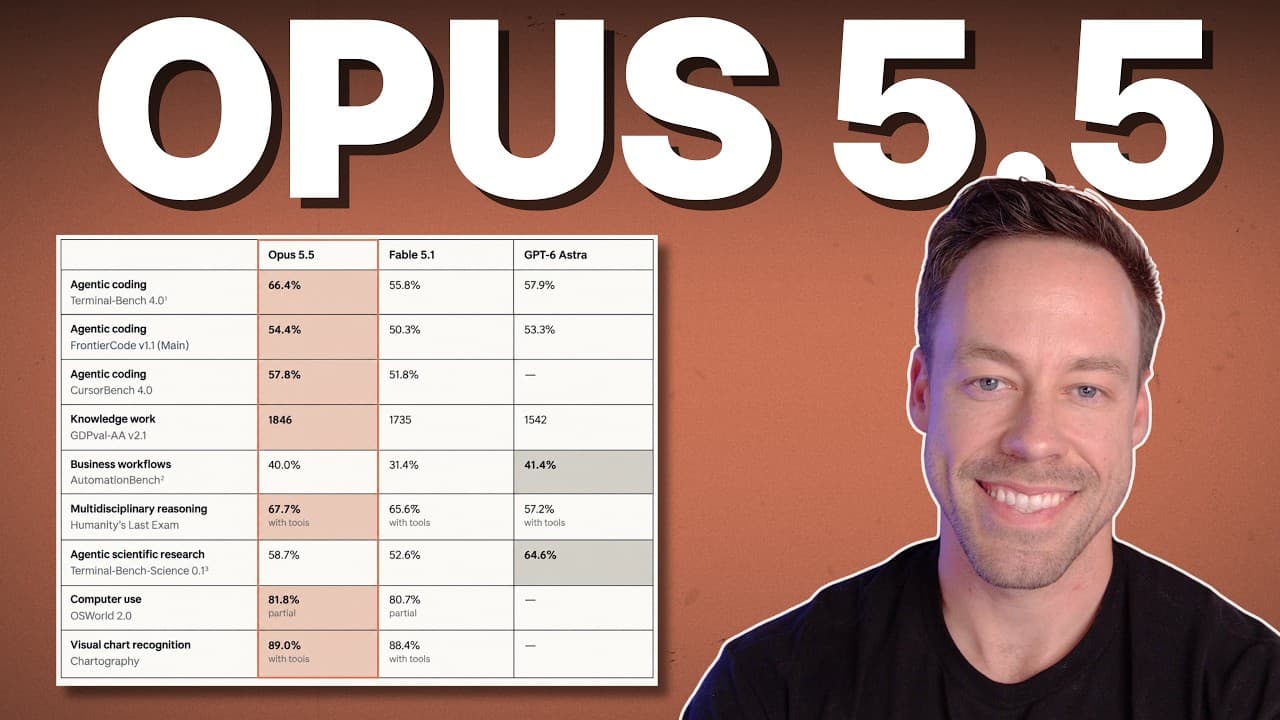
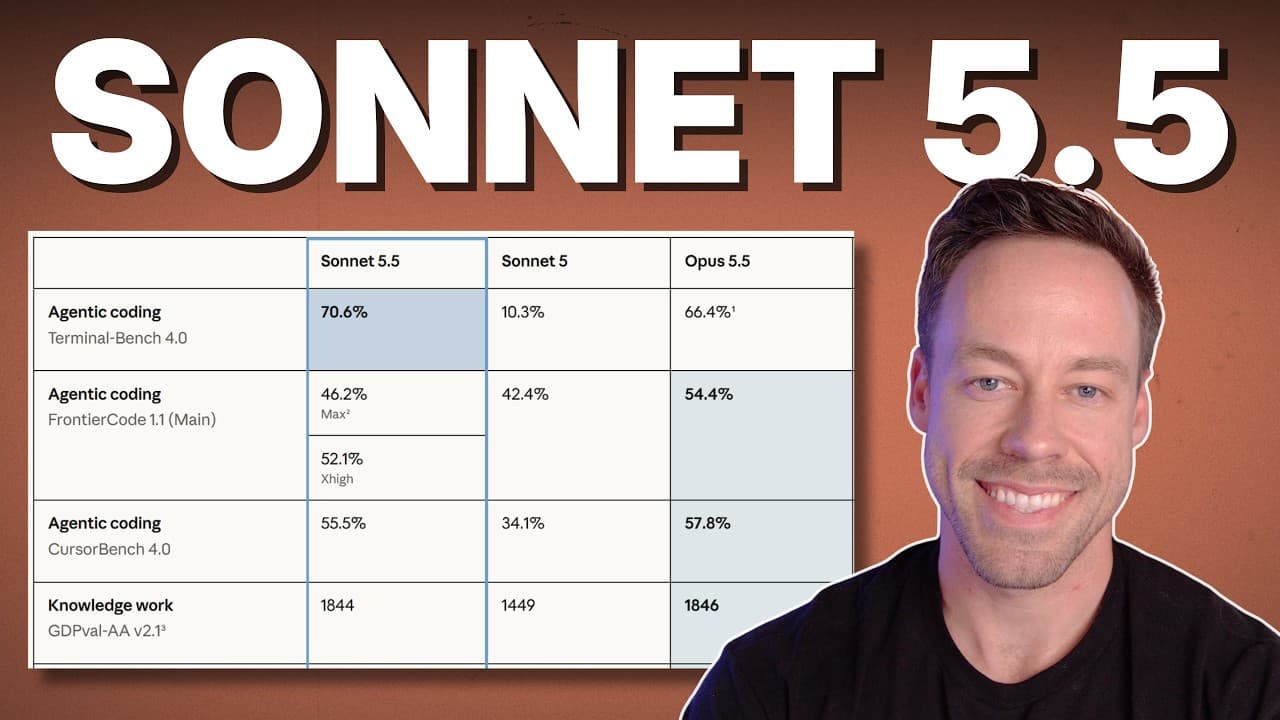
Claude Sonnet 5.5 is a genuinely big upgrade: 30% faster, 30% cheaper, stronger across the board, and on the Terminal Bench 4.0 agentic coding test it actually beats Opus 5.5 at max effort. That's a mid-tier model outscoring the flagship on a coding benchmark. I'd take that one result with a grain of salt, but even with the skepticism baked in, this is the release that finally fixes Anthropic's biggest hole — a cheap model that's actually good. Here's what the benchmarks really say once you put them next to the cost.
What's New in Claude Sonnet 5.5?
Anthropic just dropped Sonnet 5.5, and the headline is simple: 30% faster, 30% cheaper, and stronger on nearly every benchmark than Sonnet 5. That matters more than it sounds, because Sonnet 5 was a disappointment. Like a lot of people, I was underwhelmed — the numbers were just okay, and worse, it was a complete token hog. Push Sonnet 5 on a hard task and the cost would go nuts on the far ends.
Sonnet 5.5 is a different story. On Frontier Code, the score climbs from 42 up to 46 and 52 depending on effort. Cursor Bench jumps significantly. The same pattern of improvement shows up basically everywhere you look. This is the leap from Opus 5 to Opus 5.5 all over again, just one tier down — and that's exactly where Anthropic needed it most.
Does Sonnet 5.5 Really Beat Opus at Coding?
On one benchmark, yes. On Terminal Bench 4.0 at max effort, Sonnet 5.5 actually scores higher than Opus 5.5 — and Sonnet is supposed to be the smaller, everyday model class. That's the most impressive result in the whole release.
Here's the thing: I'd take that with a huge grain of salt. A smaller model beating the flagship on a single agentic coding test is the kind of result that doesn't always hold up once you throw real, messy work at it. But it's still a great sign of where this model sits.
What's genuinely interesting about Terminal Bench 4.0 is the shape of the curve. You get a pretty much linear increase in performance as you move from medium all the way up to max. Most models don't do that — they level off at high, and you get almost nothing extra going from high to max. Sonnet 5.5 keeps climbing, and it does it at a $12.54 price point on that benchmark, versus Opus at $11.24. Nearly the same cost, competitive score, smaller model.
What Do the Benchmarks Look Like When You Factor in Cost?
This is the part most people skip, and it's the part that actually matters. Who cares what the raw score is if you're paying through the nose in tokens to get it? The real question is how many tokens you're burning to finish the task — and that's exactly where Sonnet 5 fell apart.
Look at Frontier Code and you can see the trap. At high effort, Sonnet 5.5 hits 49.4%. Push it to max and the score actually drops to 46.2% — while the cost jumps from 42 cents all the way to $21. You read that right: you pay roughly 50x more and get a worse result.
That's the same behavior we saw with Sonnet 5, where cranking it to max let it go crazy with spending. So don't be surprised when you start using this thing for real and find that max doesn't always mean a better outcome. For most day-to-day work, you want to sit at high or extra high for your effort levels. Max is for narrow cases, not your default.
How Much Does Claude Sonnet 5.5 Cost?
The per-million-token pricing is where Sonnet 5.5 separates itself from Opus 5.5. Here's the breakdown:
- Cache reads — the same on both, at 20 cents per million
- Cache writes — half the cost of Opus 5.5
- Input tokens — half the cost of Opus 5.5
- Output tokens — half the cost of Opus 5.5
So you're getting benchmark scores that flirt with Opus territory at roughly half the token cost on everything except cache reads. Combine the scores with the pricing and you've got a very strong model that's perfect for medium-level tasks where you don't need Opus — and definitely don't need Fable. That's the whole pitch for the Sonnet class, and this is the first time in a while it's actually delivered on it.
Is Sonnet 5.5 Good for Knowledge Work, Not Just Code?
It's not just a coding model. On the GDPval AA test — which runs models against actual real-world problems instead of synthetic puzzles — Sonnet 5.5 scores basically at the same level as Opus 5.5, and it's a 400-point jump over Sonnet 5. For a mid-tier model, matching the flagship on real-world knowledge work is a serious result.
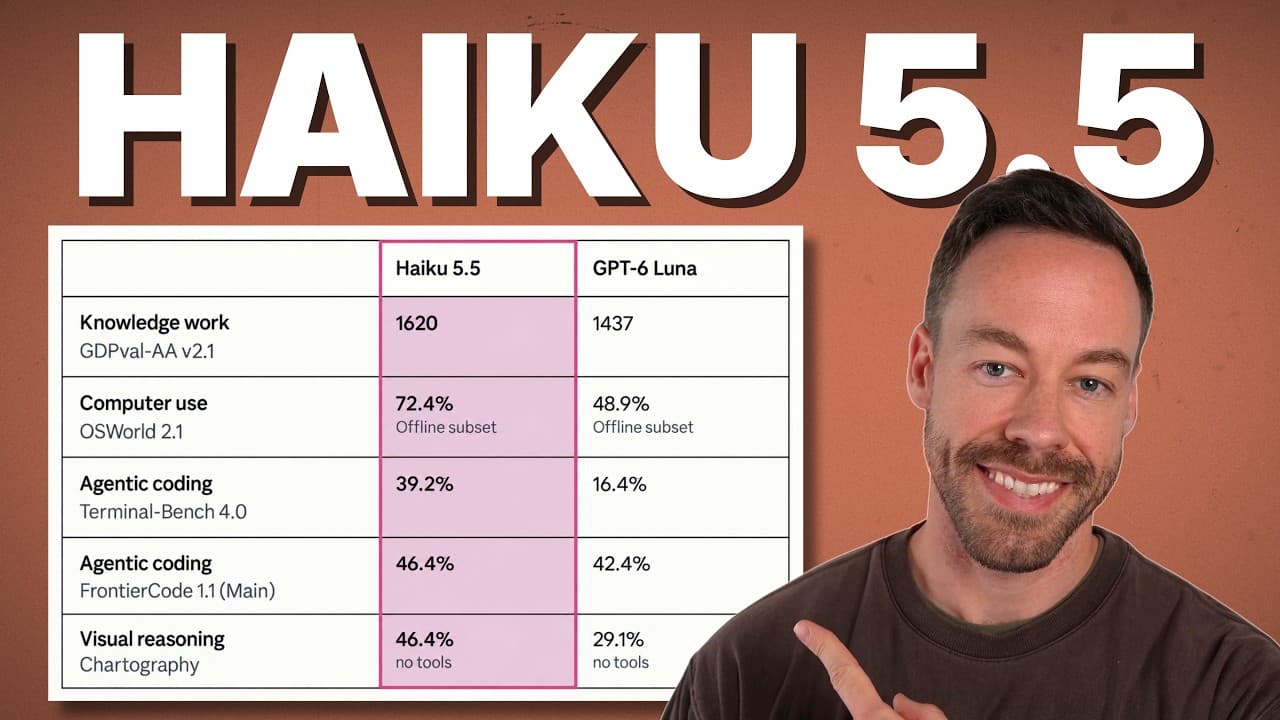
Two other upgrades stand out. It's noticeably better at computer use and chart recognition, so you can throw a pile of visuals at it and actually have it manipulate things on your machine and it works. And Anthropic says it's a much better conversational partner.
That last one matters more than it sounds. Remember Opus 5 — great on benchmarks, great on paper, but genuinely hard to talk to. Opus 5.5 fixed that. If Anthropic carried those same conversational improvements down into the Sonnet family, that's a real quality-of-life win on top of the raw numbers.
What Are the Safety Guardrails on Sonnet 5.5?
There's a catch worth knowing about before you build on it. Sonnet 5.5's cyber capabilities are strong enough that if it thinks you're doing a high-risk cybersecurity task, it falls back to a smaller, weaker model. This is happening with every new Anthropic release now — and I wouldn't be shocked if it eventually hits a Haiku-class model too.
The specifics: on a flagged high-risk request, Sonnet 5.5 drops you back to Sonnet 5. For comparison, the Opus series falls back to Opus 4.8. The Sonnet fallback stings a little more because Sonnet 5 just isn't that great — so if you're doing legitimate security work, it might be smart to reach for something other than Sonnet in the first place. The same guardrail applies to biology-related tasks.
Anthropic is also baking in anti-distillation measures, same as they did with Opus and Fable, to make it harder to train a competing model on Sonnet 5.5's outputs. None of this changes the everyday experience — but if your work brushes up against security or bio, know that the fallback exists.
Why This Release Actually Matters for Anthropic
Step back and this is the gap Anthropic has been failing to fill. Fable has been amazing since launch. Opus is now equally awesome. But the cheap, fast, everyday tier? That's where they were losing.
Meanwhile OpenAI had that niche covered. Models like Luna, Terra, and Sol gave people genuinely powerful options for everyday tasks at very low cost — even with the backlash around something like Sol 6, the cheap-and-capable lane was theirs. Anthropic tried to answer with Sonnet 5, and it just wasn't good enough.
Sonnet 5.5 is the answer that lands. If it holds up in real use the way the Opus 5.5 leap did, Anthropic finally has a complete lineup — flagship, mid-tier, and fast — with no obvious weak spot. That's good for them, and it's good for us, because it means a real, cheap, capable model you can actually reach for by default. It's available everywhere right now.
Frequently Asked Questions
Is Claude Sonnet 5.5 better than Opus 5.5?
For most work, no — Opus 5.5 is still the flagship. But on the Terminal Bench 4.0 agentic coding test at max effort, Sonnet 5.5 actually scores higher, and on the GDPval AA knowledge-work test it lands at basically the same level as Opus 5.5. For medium-difficulty tasks at roughly half the token cost, Sonnet 5.5 is often the smarter pick.
How much cheaper is Sonnet 5.5 than Opus 5.5?
Input tokens, output tokens, and cache writes are all about half the cost of Opus 5.5. Cache reads are identical at 20 cents per million. Overall Anthropic says Sonnet 5.5 is 30% cheaper and 30% faster than the previous Sonnet while being stronger across the board.
Should I run Sonnet 5.5 at max effort?
Usually not. On Frontier Code the score actually drops from 49.4% at high to 46.2% at max, while cost jumps from 42 cents to $21. For day-to-day work, high or extra high effort gives you the best results without the runaway token spend. Save max for narrow cases where you've confirmed it helps.
Why does Sonnet 5.5 downgrade itself on some tasks?
Its cyber capabilities are strong enough that Anthropic routes flagged high-risk cybersecurity or biology requests to a weaker fallback model — Sonnet 5 in this case. It's a safety guardrail present on every recent Anthropic release. If you do legitimate security work, you may want to use a different model to avoid the fallback.
Where can I use Claude Sonnet 5.5?
It's available everywhere right now, across Anthropic's platforms and the usual integrations. If you're already using Sonnet 5, switching over gets you the speed, cost, and quality gains with no change to your workflow.
If you want to go deeper into picking the right Claude model for your work, join the free Chase AI community for templates, prompts, and live breakdowns. And if you're serious about building with AI, check out the paid community, Chase AI+, for hands-on guidance on how to make money with AI.
Topicsclaudesonnet-5.5ai-modelsanthropicai-codingbenchmarks