GPT-6.1 Sol vs Sonnet 5.5: Which One Actually Wins?
OpenAI's GPT-6.1 Sol posts insane benchmarks at a fraction of the cost. I ran it head-to-head against Sonnet 5.5 across four real builds to see if the numbers hold up.
On this page
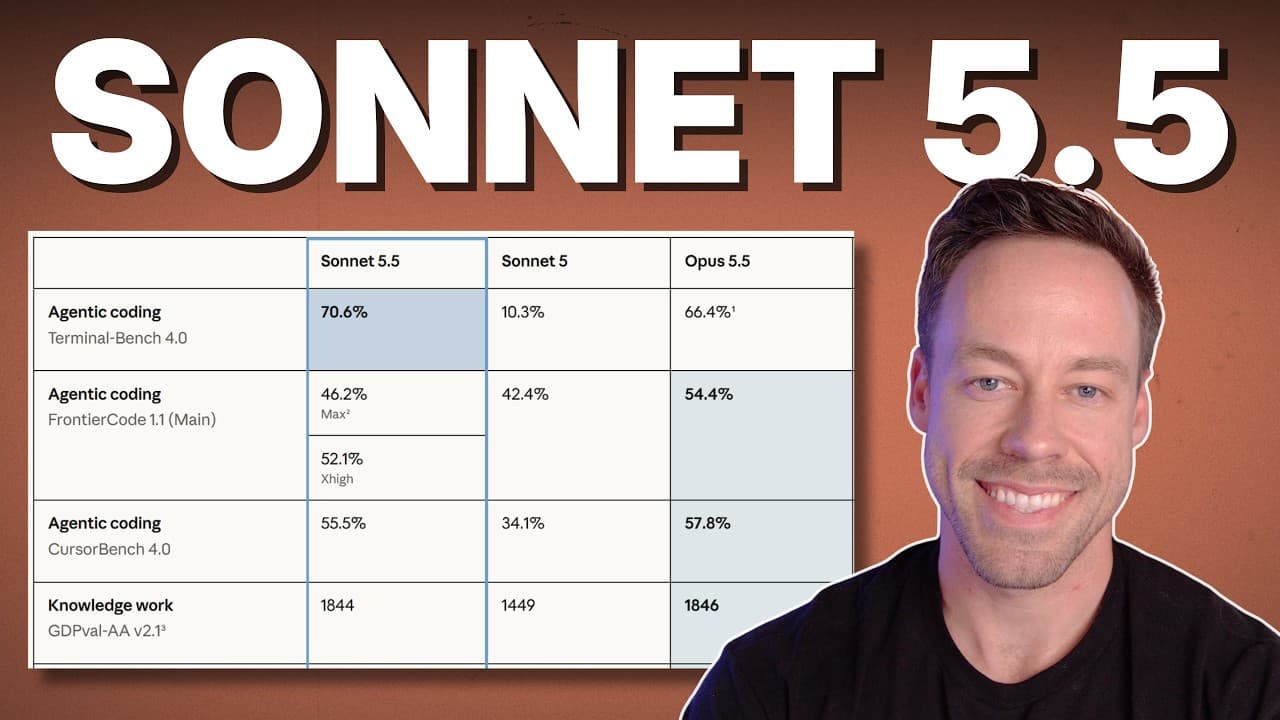
GPT-6.1 Sol is a slight step below Sonnet 5.5 on raw quality, but it's so much cheaper and more token-efficient that for most real-world work, it wins on value. OpenAI dropped it at Dev Day right after the underwhelming GPT-6 Astra, and the benchmarks looked too good to be true. So I ran Sol through the exact same four tests I used on Sonnet 5.5 the day before. Here's what actually happened when I stopped reading charts and started building.
Why Did OpenAI Release GPT-6.1 Sol So Soon After GPT-6?
That was my first question too. GPT-6 Astra had just shipped a few days earlier and landed with a thud. Then at Dev Day, OpenAI put out GPT-6.1 Sol, and the benchmarks were a different universe.
On the Deep Sweet benchmark, Sol outperforms GPT-6 Astra at a fraction of the cost. Same story across multiple charts OpenAI presented. Which makes you ask the obvious thing: why ship Astra at all if Sol was sitting in the wings and it's this much better?
The honest answer is that the raw numbers only tell you half the story. A benchmark score is not you and me using the model on real tasks. So before I trusted any of it, I wanted to put Sol in a ring with the model I actually reach for — Sonnet 5.5.
What Do the Raw Benchmarks Say About Sol vs Sonnet?
Start with the reported numbers, because they set up the whole fight.
- Artificial Analysis indices — Sonnet pulls ahead overall. Not by a landslide, but +7 on healthcare and medical is a real gap.
- Deep Sweet (coding) — Sol wins by 4.2.
- Automation Bench (coding) — Sonnet wins by a wider 8.7.
So on pure capability, it's close, with Sonnet slightly favored. Then you get to cost, and the picture flips hard.
On paper, both models are priced identically: $2 per million tokens in, $10 per million out. Same sticker. But sticker price is a trap, because what matters is how many tokens each model burns to finish a task — and how fast.
Sonnet is reported to be about 2x faster. But Sol is the token-efficiency monster. On the Artificial Analysis cost-per-task numbers, Sol came in up to 10x cheaper in some cases.
How Much Cheaper Is GPT-6.1 Sol in Practice?
This is the stat that reframes the whole model. Look at the "max" effort level on those Artificial Analysis benchmarks:
- Sol: $0.72 per task
- Sonnet: $7.60 per task
That's a 10x gap at the top effort setting. And it's not that Sol is cheap because it's phoning it in — when both models hit the same 52% score on a benchmark, Sol was still 4x cheaper per task. Same result, quarter of the bill.
Why does this matter so much right now? Because OpenAI just quietly cut usage on the $200 plan in half — it went from 20x to 10x. A hyper-efficient model is exactly what you'd want them to ship alongside a usage cut. More on that math later, because it's not as one-sided as the outrage makes it sound.
Benchmarks set the stakes. Now the real test: four builds, same prompts, head-to-head.
Test 1: Can It Build a JavaScript Explainer Video From Code?
These code-generated explainer videos are everywhere right now — the model writes JavaScript that renders a video, no AI video-generation tools involved. I asked Sol for a 15-second vertical explainer teaching how Claude uses sub-agents.
Sol's output was mediocre. Not terrible — the visuals were fine and I understood the message. But the audio was completely off. It felt like it grabbed a random soundtrack and nothing flowed together.
Sonnet 5.5 was a clear step up. Multiple scenes, and more importantly, the audio was actually married to the visuals. It felt like a coherent story instead of a slideshow with a backing track.
Token count: Sol used 70K, Sonnet used about 300K. So Sonnet won the quality round — but it spent roughly 4x the tokens to get there. That tradeoff is the theme of the entire test.
Test 2: Which Model Designs a Better Landing Page?
Same prompt to both: build a landing page for a fictional boutique hotel called Dune House.
One handicap worth naming — Sonnet doesn't have a built-in image generation model the way Sol 6.1 does. So I told Sonnet it could use the Higgs Field API if it needed images, which it did. (Side note: Higgs Field's new pay-as-you-go API is way more economical than the monthly subscription unless you're generating at serious scale — you get the same image and video models, just billed per task.)
Sol's page leaned into the big hero section like every new model does. Clean, professional, not flashy — GPT models consistently have tasteful front-end instincts. The miss: no availability bar up front. It just had a vague "find your room" element instead of the date/guest checker you'd expect on a real hotel site. Honestly, if you told me GPT-6 Astra built this, I'd have believed you — which is kind of the point. If a model this cheap is giving me Astra-level design, what's there to complain about? Tokens: 109K.
Sonnet's page also led with a big hero image, but it included a working "check availability" pill. I didn't love the look — the text crowds the edges and reads a little cheap — but the functionality was there. Scrolling down, Sonnet did some genuinely sharp things, like cropping images in a way AI wouldn't have attempted a year ago without heavy prompting. It also used a second full-bleed image near the bottom that added a premium feel. Tokens: ~200K.
Verdict: a tie. I'd lean Sol on pure design taste, Sonnet on functionality — but functionality here is one prompt away from fixed. Sonnet used roughly double the tokens.
Test 3: Which Model Builds a Better 3D Travel Dashboard?
Third test, more front-end, but with a creative brief: a travel dashboard built around a 3D globe, lots of freedom, aim for a visual spectacle.
Sol gave me a clickable globe where I could set a departure point and watch the routes change, check destination weather, and see where golden hour falls. Cool touches, but thin on depth — clicking a city didn't surface much, and there was a weird flashing black box I couldn't explain. Compared to what Astra produced in my last video, it was lacking substance. Tokens: 150K.
Sonnet won the spectacle. I could zoom in further, it added ambient audio, and clicking a city pulled up a photo (generated via Higgs Field, since Sonnet has no native image gen) plus real detail — fare trends over time, weather, nearby stops. Hovering cities nudged the globe; clicking triggered a slick transition. Is it deeply functional? Not really. But "visual spectacle" was literally the brief, and Sonnet nailed it. Tokens: 400K.
Edge to Sonnet on the final product. But keep the receipts in view: Sol hit a respectable result for 150K tokens against Sonnet's 400K. On every test so far, Sol has won the token game by a wide margin.
Test 4: Which Model Builds a Better Browser Game?
Last test, the hardest: clone World of Tanks and make it run in the browser using three.js. Same prompt to both.
Sol delivered four selectable tanks, seven players per side, three ammunition types, and a live minimap tracking every tank's position and health in real time. Movement felt good. Controlling the aim was a little awkward, and I died immediately (a recurring theme in these game tests), but the UI was solid. Tokens: ~350K. Time: over 2 hours.
Sonnet had a more detailed loading screen with per-tank stats, a larger map, and zoom controls that were easier to manage mid-fight. The tanks themselves looked a little less characterful than Sol's, but the map and the feel of movement were better. Tokens: ~700K. Time: about 1 hour.
Verdict: basically even. Every difference here is subjective, eye-of-the-beholder UI stuff. But notice the split that defines this whole model — Sol used half the tokens but took twice as long. Cheaper, but slower.
So Is GPT-6.1 Sol Worth Using Over Sonnet 5.5?
Here's the pattern across all four tests: 6.1 Sol feels like a slight step below Sonnet 5.5 on quality, while being dramatically more token-efficient. It's cheaper, but it's slower.
For most real-world tasks, that trade is fine. You can reach for Sol instead of Sonnet — and probably instead of Opus or Astra too — and not feel the quality gap in day-to-day work. The real question isn't "which model is best," it's what does your usage and budget actually look like?
Because the headline number is wild: Sol was 4x cheaper than Sonnet 5.5 on benchmarks where it scored the same. If that hyper-efficiency is real and not just juiced for the launch, you've got a model that's extremely cheap and genuinely powerful. That's not something to discount.
Is OpenAI Screwing You With the Usage Cut?
This is where the nuance lives. Yes, OpenAI cut the $200 plan from 20x to 10x, and people are furious. But before you rage-quit, understand the fine print on both sides.
Anthropic's "20x" plan was never 20x in the way you think. That multiplier was tied specifically to the 5-hour limit, not your weekly usage. OpenAI's plan has no 5-hour limit — but it does now have a weekly cap. Anthropic has always had the 5-hour limit.
So if OpenAI slashing to 10x weekly feels like getting screwed, then by the same logic Anthropic has been doing a version of that the whole time — just less transparently. All OpenAI really did was give you the same kind of weekly-usage structure Anthropic already runs, and be louder about it.
That's not a free pass for OpenAI. It's context. And it's exactly why token efficiency matters more than raw benchmark scores right now. When usage is the real constraint, a model that does the same job for a quarter of the tokens changes your entire cost structure.
Frequently Asked Questions
Is GPT-6.1 Sol better than Sonnet 5.5?
Not on pure quality — across four hands-on tests, Sol landed slightly below Sonnet 5.5 on the final product. But Sol is far more token-efficient and cheaper, up to 10x cheaper per task at max effort, which makes it the better value pick for most real-world work.
How much cheaper is GPT-6.1 Sol than Sonnet 5.5?
Both models share the same list price ($2 per million tokens in, $10 out), but Sol burns far fewer tokens per task. At the "max" effort level it cost $0.72 per task versus Sonnet's $7.60 — roughly 10x cheaper. On benchmarks where both scored 52%, Sol was still 4x cheaper.
Is GPT-6.1 Sol slower than Sonnet 5.5?
Yes. Sonnet is reported to be about 2x faster. In the browser-game test, Sol took over two hours while Sonnet finished in about one — using roughly half the tokens. Sol trades speed for efficiency.
Did OpenAI really cut the $200 plan in half?
Yes, the $200 plan dropped from 20x to 10x usage. But context matters: Anthropic's "20x" was tied to its 5-hour limit, not weekly usage, and OpenAI's plan has no 5-hour limit. The cut mostly brings OpenAI's weekly structure in line with what Anthropic already does.
Should I replace Sonnet with Sol in my stack?
For budget-sensitive, high-volume work, Sol is a strong default — the quality gap is small and the cost savings are large. For tasks where top-end quality or speed is critical, Sonnet 5.5 still has the edge. The smart move is keeping both and routing by budget and task.
If you want to go deeper into picking the right AI model for your stack, join the free Chase AI community for templates, prompts, and live breakdowns. And if you're serious about building with AI, check out the paid community, Chase AI+, for hands-on guidance on how to make money with AI.
Topicsgpt-6.1-solsonnet-5.5ai-modelsopenaianthropicmodel-comparisonai-coding